Field Notes · Dossier № 001
The Mugger Dossier
Everything a good neighbour should know about Crocodylus palustris — the marsh crocodile, the makara of myth, and the longest-standing resident of the Vishwamitri. Compiled riverside, checked twice.
Vitals
The numbers on the chart.
Anatomy of a neighbour
Built for patience.
Tap the numbered pins — every part of a mugger is a tool refined over 200 million years.
Carry these
Twelve facts for the riverbank.
№ 01
Older than the dinosaurs' end
Crocodilians survived the asteroid that ended the dinosaurs. The shape you see in the Vishwamitri is 200 million years of "no notes."
№ 02
Mugger means makara
The name is Sanskrit, not slang — makara, the mythic water beast, became magar in Hindi, then "mugger" in colonial English.
№ 03
The gape is a thermostat
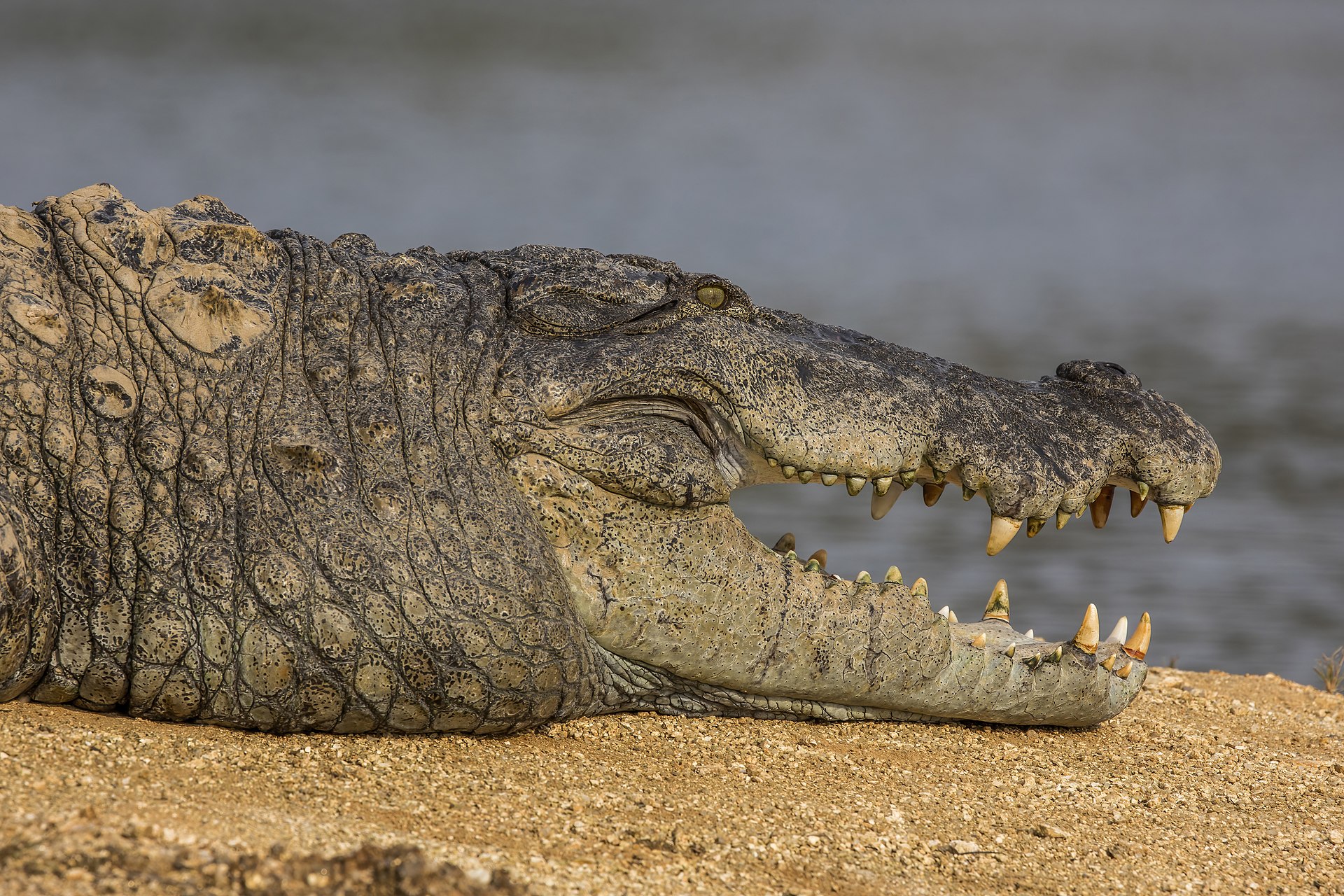
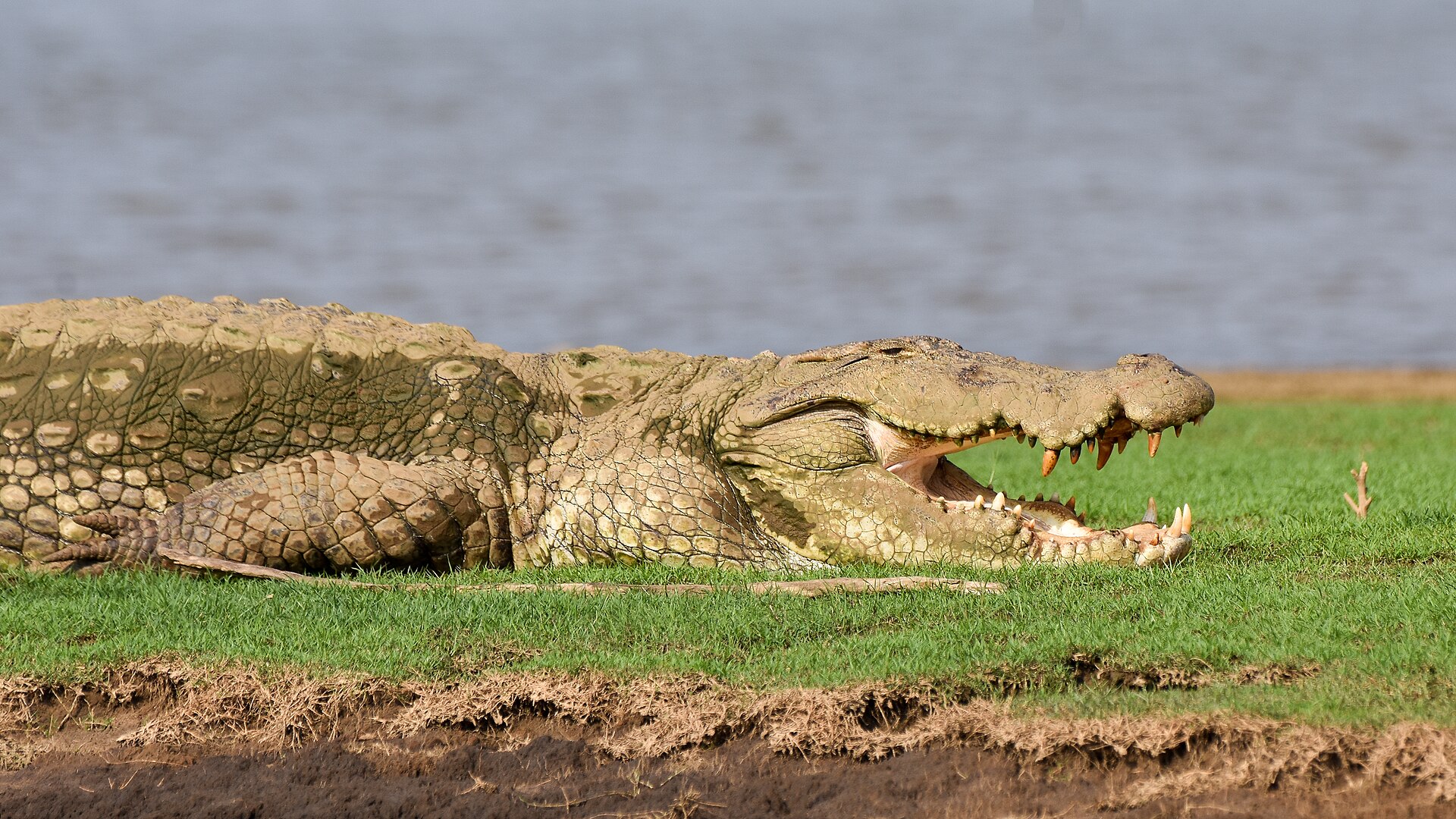
An open-mouthed croc isn't threatening you. It's cooling off. Muggers can't sweat, so they park with jaws wide like a car with open doors.
№ 04
They walk to work
Muggers are champion overland walkers among crocodilians — kilometres in a night on surprisingly brisk legs. Hence the monsoon surprises.
№ 05
Tool users — maybe
Muggers have been observed balancing sticks on their snouts during heron nesting season — possibly bait. Possibly genius. Researchers argue.
№ 06
The nest decides the sex
No chromosomes involved — incubation temperature determines whether hatchlings are male or female. Warm centre, cool edges, mixed family.
№ 07
A devoted mother
She guards the nest for two months, digs the hatchlings out when they squeak, and carries them to water in those same crushing jaws — gently.
№ 08
Teeth on subscription
Each of the 66 teeth is replaced again and again — a mugger may run through 3,000 teeth in a lifetime. Dentists weep.
№ 09
Stones for ballast
Muggers swallow stones — gastroliths — that grind food and trim their buoyancy like a submarine's trim tanks.
№ 10
An hour underwater
Resting heart rate drops to a few beats per minute. The river you glance at holds more watchers than it ever shows.
№ 11
City crocs eat modestly
Fish, water birds, the odd unlucky dog. A big mugger can fast for months — the "man-eater" reputation belongs to other species elsewhere.
№ 12
Vadodara is a stronghold
Globally Vulnerable, locally thriving. This unbothered city quietly runs one of the most successful mugger habitats in the species' range.
Rumour control
Myth, meet fact.
Vadodara's muggers have lived beside millions of people for centuries with vanishingly few incidents. Humans aren't on the menu — fish are. Respectful distance keeps it that way.
Crocs really do "cry" while eating — air forced through the sinuses pushes tears out. It's plumbing, not performance. The idiom got the biology backwards.
A mugger explodes from stillness to strike in a fraction of a second and sprints at 12 km/h on land. The stillness isn't laziness — it's the oldest ambush strategy on Earth.
Relocated muggers famously walk home — sometimes dozens of kilometres. And the species is Vulnerable globally; Vadodara's population is a conservation asset, not a problem to ship away.
Feeding teaches crocodiles to associate humans with food — the one lesson that genuinely breaks the truce. The kindest thing you can hand a mugger is distance.
Field assessment
Earn your riverkeeper badge.
Read the long-form
The Long Truce →
Six centuries of coexistence, told in five chapters.