A digital field guide · Gujarat, India
Mugger City
Three hundred wild crocodiles. Two and a half million people. One river.
Enter the river
A digital field guide · Gujarat, India
Three hundred wild crocodiles. Two and a half million people. One river.
Enter the river
The Long Truce
How a sacred monster and a stubborn city learned to leave each other alone.
Read the story

The Monsoon Chapter
Every July, Vadodara politely returns its crocodiles — one rescue at a time.
See the monsoon
The river, mapped
Tap through every neighbourhood of the Vishwamitri, bend by bend.
Explore the mapThe river census
Figures rounded & illustrative · field sources
Living free along the city stretch of the Vishwamitri.
Vadodara's people, sharing banks, bridges and mornings.
The Vishwamitri's winding path through the city limits.
Crocodiles appear in Baroda records older than its palaces.
The river
Twenty-four kilometres of it run through the middle of Vadodara — Ajwa to Nimeta, past the reed beds at Sama and under the Kala Ghoda bridge. Every one of those bends has crocodiles in it.
Explore the river, bend by bend40+ Ajwa km 0 Nursery water, below the reservoir gates
60+ Sama km 6 Basking flats and reed beds
90+ Kamati Baug km 11 The urban core — the densest stretch
50+ Kala Ghoda km 15 Deep pools under the bridge
40+ Nimeta km 22 The wild edge, where the city lets go
One mark per animal, using the recorded minimum for each stretch — which is why they come to 280 and not the 300+ the whole river carries. Rounded field estimates, not a headcount. Sources.
One river. One city.
Hundreds of crocodiles.
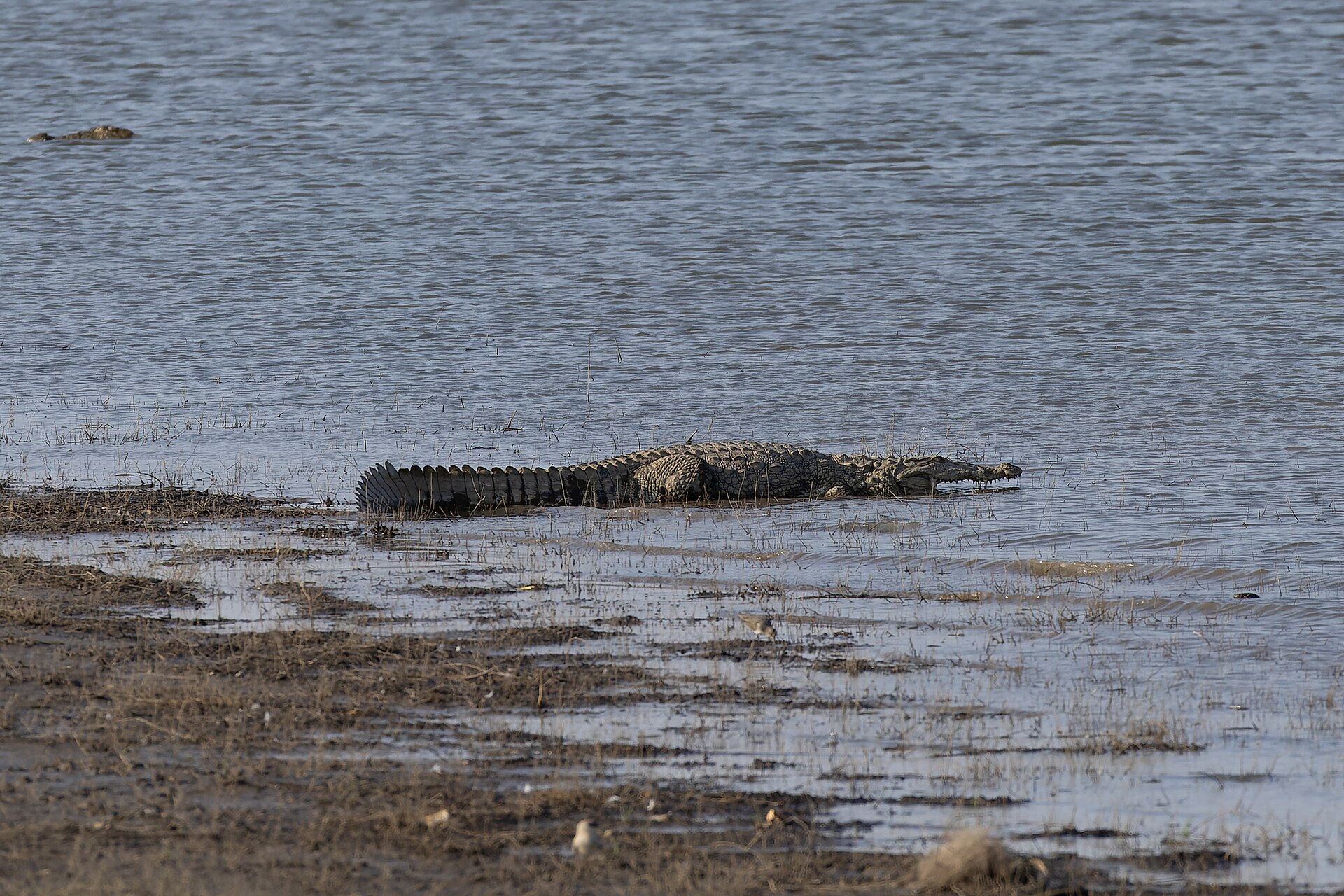
Vadodara has something most cities don't: wild crocodiles living alongside it. The Vishwamitri cuts through the city, passing roads, bridges, homes and neighbourhoods while supporting a population of mugger crocodiles.
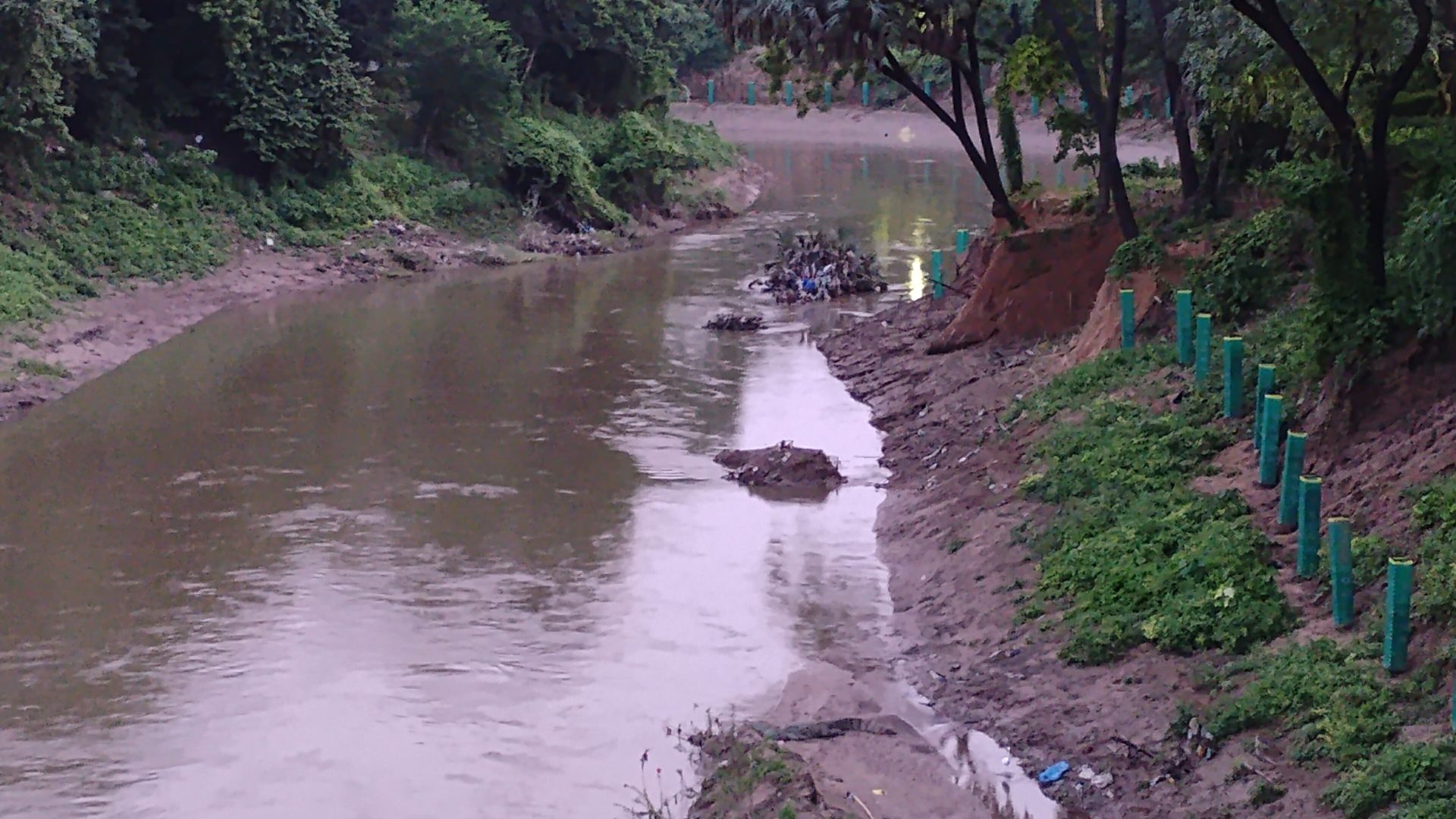
The Vishwamitri isn't some remote wilderness. It runs directly through Vadodara, creating pockets of habitat inside an urban landscape.
Despite roads, buildings and human activity surrounding the river, muggers have continued to inhabit the Vishwamitri and its connected wetlands.
This makes Vadodara a fascinating example of urban wildlife. The story isn't simply about a city invading crocodile habitat or crocodiles invading a city. It's about two worlds occupying the same space.
A day on the river
A crocodile's day is ruled by the sun, not the clock. Here's how the same stretch of the Vishwamitri changes hands between dawn and dark.
05:30 · Dawn
As the first light warms the banks, muggers slide out of the cool water to bask. Bodies pressed to the mud, they spend the early hours recharging like solar panels.
12:00 · Noon
By midday they're hot. Mouths gape wide to shed heat — the famous "grin" that alarms tourists is really just a thermostat running at full tilt.
18:30 · Dusk
As temperatures fall, the muggers return to the water. Dusk is the working shift — patient ambushes for fish, the occasional water bird, a stray dog at the edge.
23:00 · Night
Sweep a torch across the black water and points of orange-red glow back — the tapetum behind each eye. The river you walked past at noon is wide awake at midnight.
Field dossier
Drag, swipe or use arrow keys
Record · 01
"Mugger" has nothing to do with crime. It comes from the Sanskrit makara, the mythical water beast, through Hindi magar. The pickpocket meaning is pure coincidence.
Record · 02
A mugger can't sweat. Basking with jaws open is its thermostat — the gape sheds heat while the body soaks up sun. That "menacing grin" is just air-conditioning.
Record · 03
Muggers commute. They're one of the few crocodilians that happily walk long distances overland at night — which is how one ends up in a garden during monsoon.
Record · 04
Every summer, females dig nests into the soft banks and lay up to 30 eggs. Nest temperature decides the hatchlings' sex — the river literally engineers its next generation.
Record · 05
A resting mugger can stay underwater for over an hour. The river you walk past on your way to work has more eyes on you than you think — all of them polite.
The monsoon chapter
Every July, the Vishwamitri swells beyond its banks — and its oldest residents drift out with it. What follows is Vadodara's strangest civic ritual: the polite return of crocodiles, one rescue at a time.
Conservation
Schedule I legal protection, an IUCN Vulnerable listing, and six hundred years of an unwritten riverbank code — the numbers behind Vadodara's mugger population, and what protecting it actually takes.
Read ConservationThe Vishwamitri belongs equally to the muggers and to the millions who live beside it. Six centuries on, both sides are still keeping their word.
Mugger City · Vishwamitri · Gujarat