
Coexistence — a person and a mugger crocodile walk in from opposite sides of the same ground, come to rest facing each other across the centre, then continue on their separate ways without ever interacting.

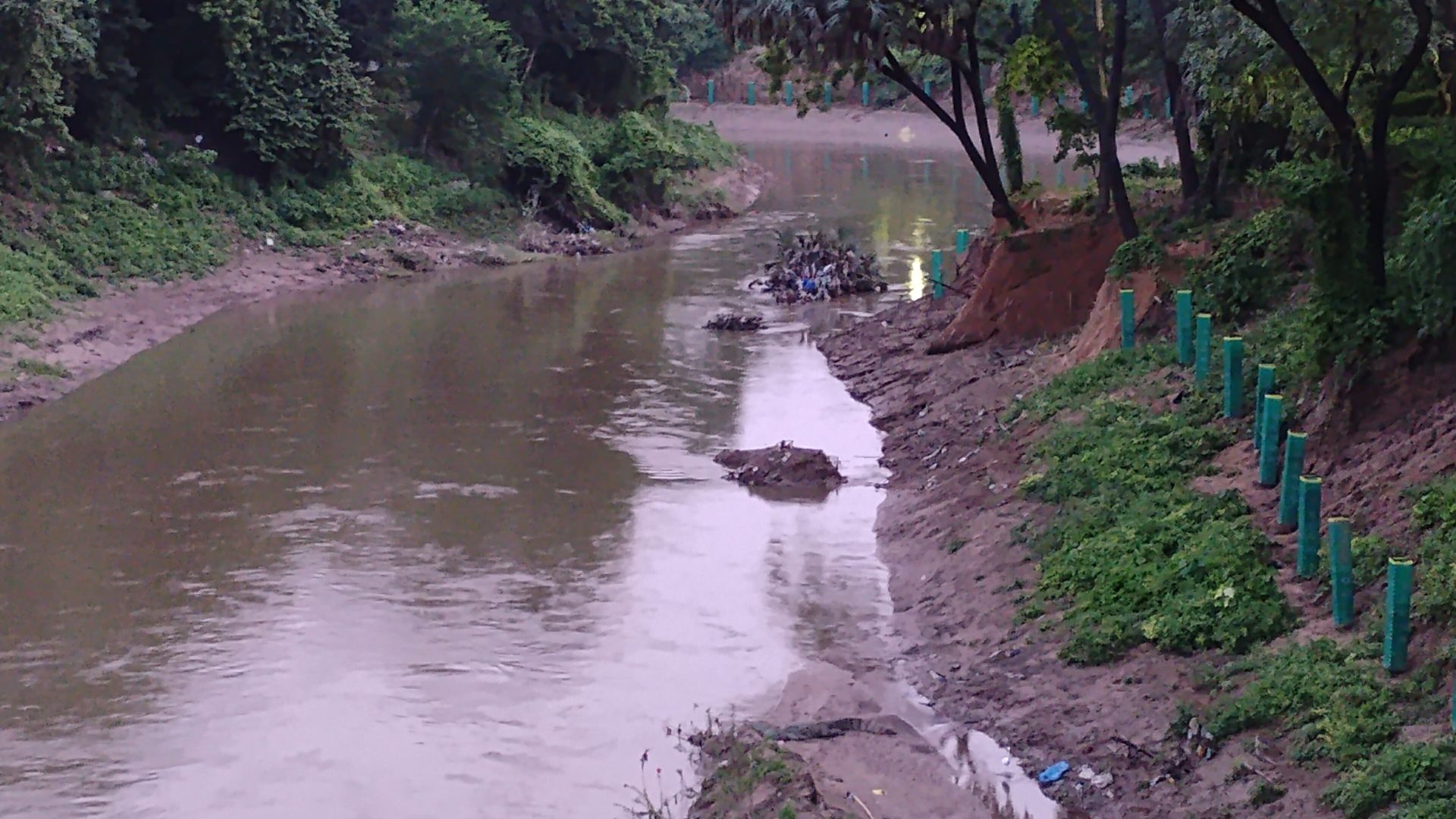
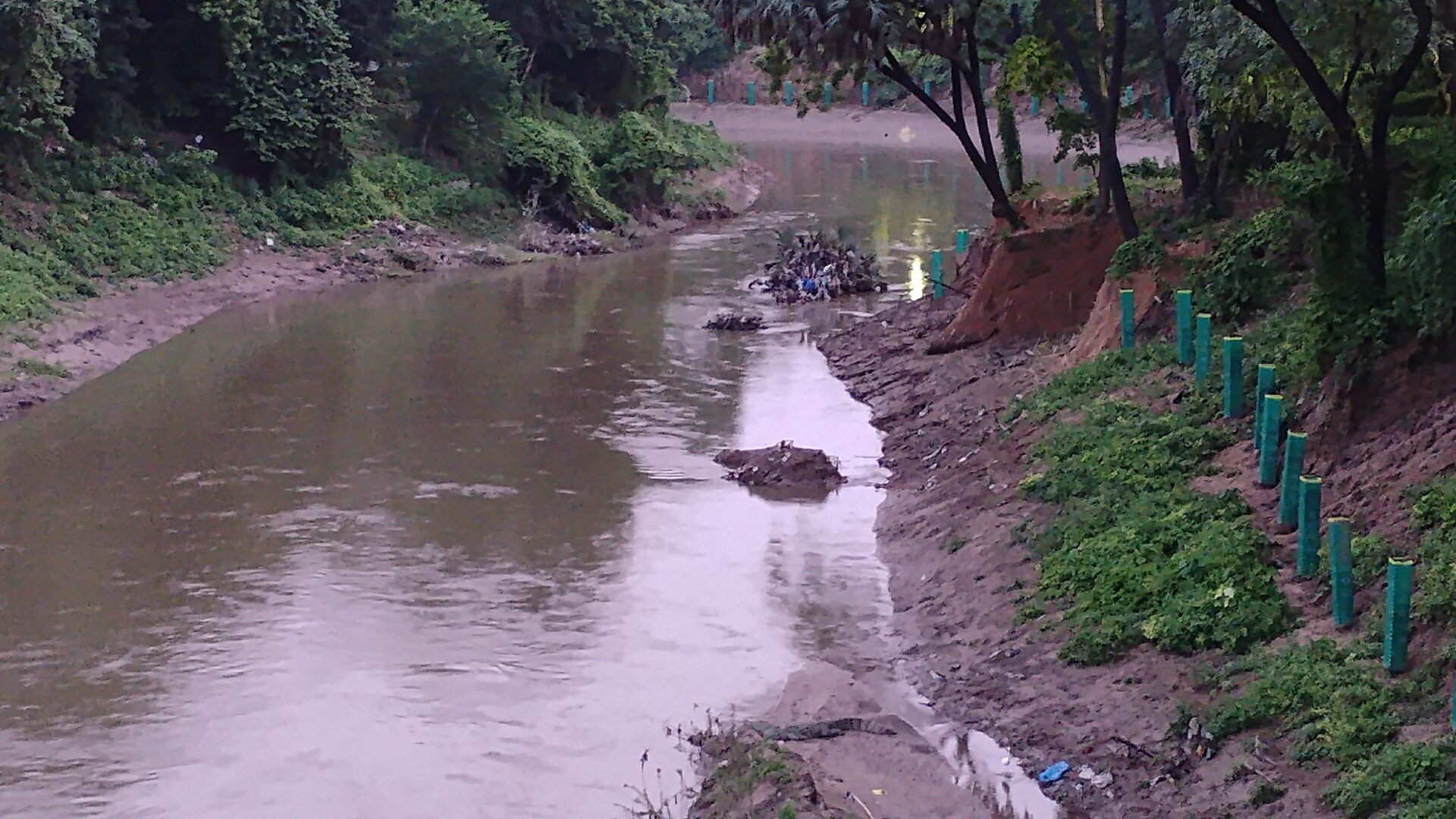
The Vishwamitri river flowing through Vadodara

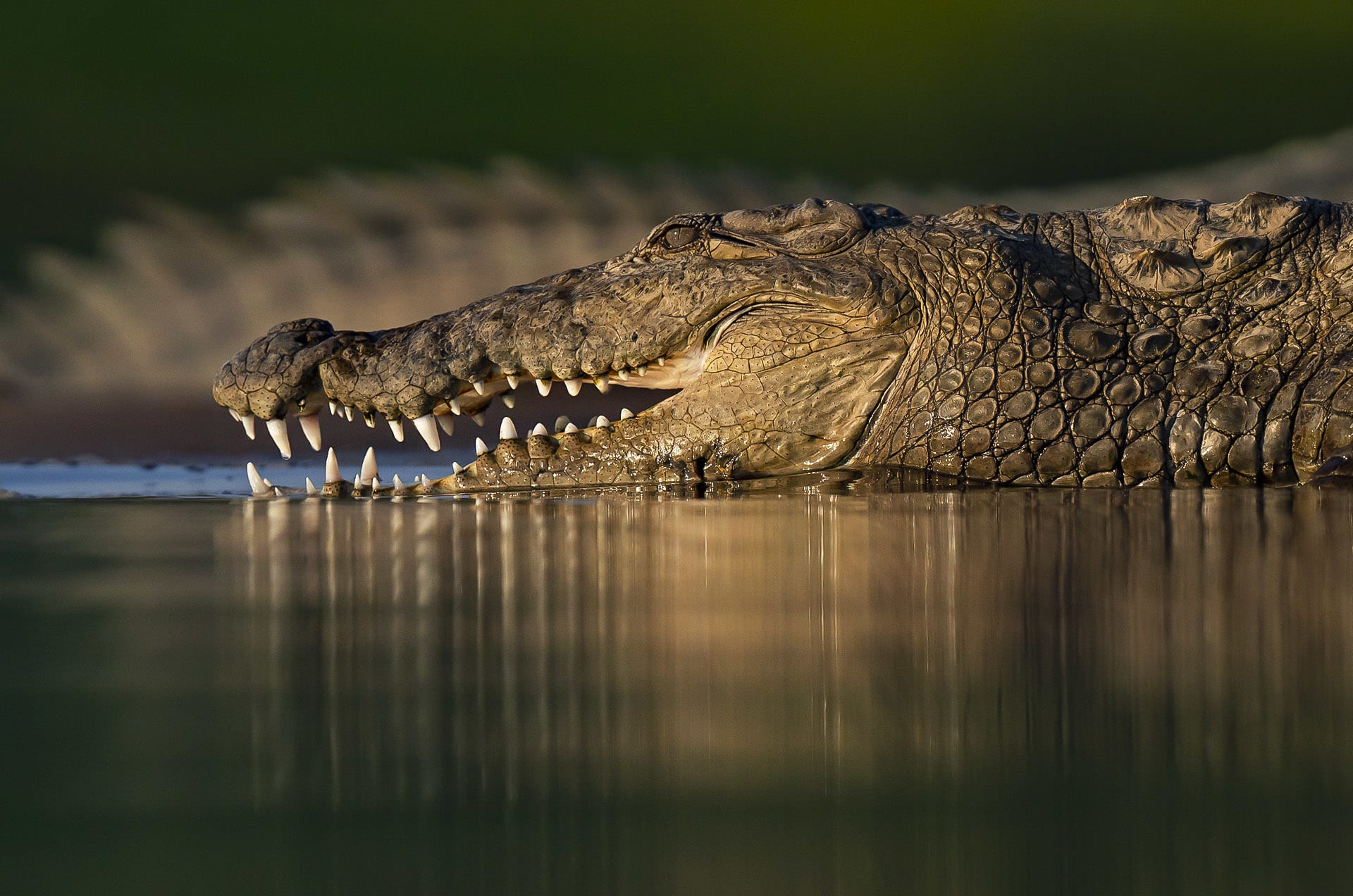
Living alongside the mugger

Coexistence.

How a sacred monster, a stubborn river, and an unbothered city spent six hundred years learning to leave each other alone — and accidentally built the most remarkable coexistence on Earth.

Mugger City · Coexistence · 10 min read

A true story · Malataj, Gujarat

The farmer who woke to find a crocodile beneath his bed

It began with dogs barking in the dark and two glowing eyes under a rope cot — and turned into a quiet lesson in how a village and its crocodiles share a single lake. This really happened.

March 2019When it happened
~8 ftThe female mugger
~500 mFrom Malataj Lake
MalatajAnand, Gujarat

Around half past one in the morning, on a night in March 2019, thirty-year-old farmer Babubhai Mohanbhai Parmar woke to the sound of the village's stray dogs barking without pause. He was asleep on a charpai — the woven rope cot found in almost every home in rural Gujarat, its bed raised a hand's width above the floor. Half awake, he looked down through the ropes. Two reflective eyes looked back. Resting in the cool dark directly beneath him was an eight-foot female mugger crocodile.
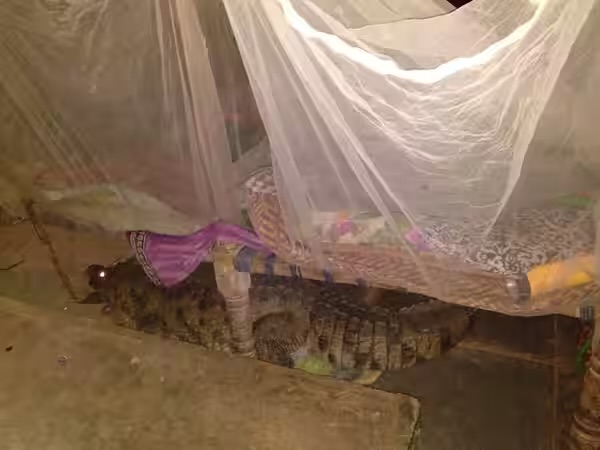
She had not come to harm him. Forest officials and rescuers later explained what the night really was: the crocodile was pregnant, and March is the mugger's nesting season, when females leave the water and travel overland to find quiet, sheltered ground to lay their eggs. Babubhai's house stands roughly five hundred metres from Malataj Lake — a short walk for a nesting female — and the one raised, dry, hidden space in the room was the floor beneath a rope cot. She was a mother at the end of a long walk, looking for somewhere safe.

No one panicked. Babubhai raised the alarm and neighbours kept a careful distance. The Gujarat Forest Department was called, wildlife volunteers from the Daya Foundation came to assist, and the village sarpanch, Durgesh Patel, helped steady things on the ground. Because the crocodile was pregnant, the team refused to improvise — they waited for the proper equipment before safely capturing her and relocating her, unharmed, well away from the houses. No injuries, on any side.

"It was an eight-foot-long female crocodile that was pregnant. Since it is their nesting season, it would have ventured out to lay eggs." — Durgesh Patel, Village Sarpanch

To an outsider, a crocodile under a bed is a horror story. To Malataj, it was an unusual guest on an ordinary night. The village and its muggers have shared the same lake for generations, and mostly they manage it without incident. The lake's edge and the village's edge are the same edge — and that overlap, handled with patience rather than fear, is exactly what coexistence looks like.

It is the same agreement Vadodara keeps with the crocodiles of the Vishwamitri, and has for six hundred years — share the water, and keep the peace.

A documented incident from Malataj (Sojitra taluka), Anand district, Gujarat — March 2019.
History

The god's ride

Long before anyone counted crocodiles, people here carved them. The makara — part crocodile, part myth — guards temple doorways across Gujarat, curls around the bracelets of river goddesses, and carries Khodiyar Maa, protector of those who live beside water, wherever she needs to go.

So when the people of old Baroda looked at the long shapes drifting in their river, they did not see vermin. They saw the neighbour of a goddess. You may not love a neighbour like that, but you certainly don't throw stones at her ride.

That single cultural fact — reverence, settling over fear like silt — is the foundation everything else in this story is built on.

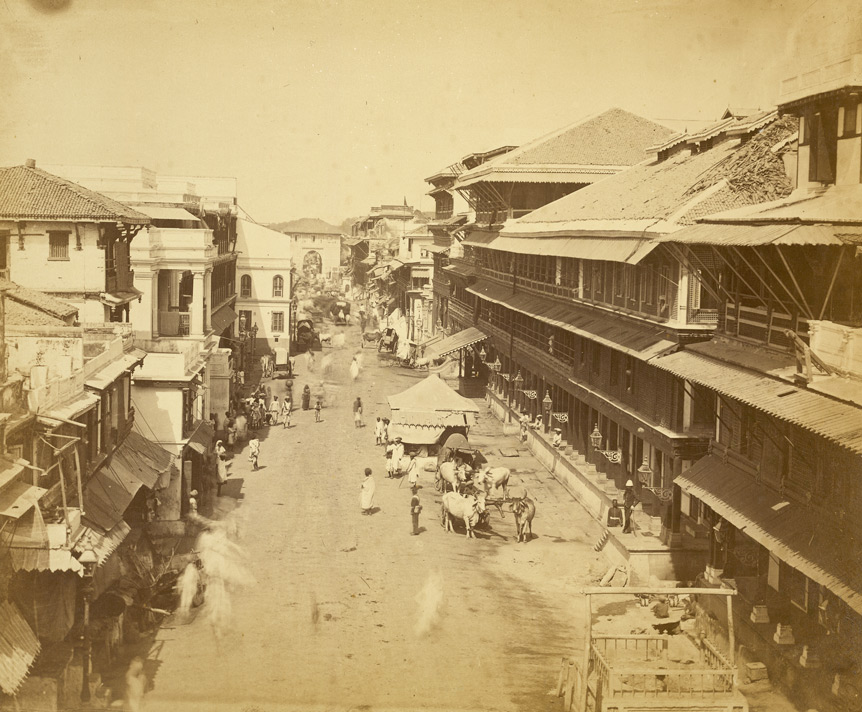
A street scene in Baroda, circa 1880
Baroda, c. 1880 — the crocodiles were already old residents

History, continued

The river that stayed

The Vishwamitri is not a grand river. It is narrow, moody, monsoon-fed, and named after a sage with a famous temper. For most of the year it moves through Vadodara like a quiet thought — twenty-four kilometres of green water, reed beds, and mud banks the colour of old brass.

The city grew up around it the way cities do: palaces, then railways, then ring roads. The Gaekwads built Sayaji Baug on its bank — a great Victorian garden where the river slides past flowerbeds. Bridges multiplied. Traffic thickened.

And through every era, in the same pools, under the same banyan shade: the muggers. They watched the palaces rise. They watched the British arrive and leave. They are, by any honest measure, the city's oldest continuous residents — and they never once moved out.

"Everyone else came to Vadodara. The crocodiles were the welcoming committee."
River survey · Vishwamitri, Vadodara
The Vishwamitri river winding through Vadodara

Shared landscape

One river, five neighbourhoods.

From the nesting grounds at Ajwa Reservoir to the wild edge past Nimeta, the Vishwamitri runs through the entire city — and every bend has its own residents, reputations, and rules.

Explore the map →

Voices of the Vishwamitri

Add your own story.

This is a living, community-built archive. Photos, poems, sketches, blog posts, school projects — if it's about the mugger and the river, it belongs here. Submit it right below.

How it works

  • 1You submit a story, photo, poem, or sketch using the form.
  • 2A real person reviews every submission — nothing publishes automatically.
  • 3If it fits, we prepare it for the archive.
  • 4It joins the public gallery, credited to you or kept anonymous — your choice.
See the full community archive →

Goes to a private inbox for review — nothing publishes automatically.

Conservation

Vulnerable globally, thriving here.

Coexistence only works because there's still a river worth coexisting with. Here's what protecting it actually takes.

Read Conservation →

The monsoon test

Coexistence, measured.

200+Rescues every decade
44Crocs rescued, 2019 floods
0Panic, then or since
See the full rescue story →

We don't simply live near crocodiles.
We share a home.

No fence. No zoo. No treaty — only a river, and the oldest agreement in the city. The Vishwamitri belongs equally to the muggers and to the millions who live beside it. Six centuries on, both sides are still keeping their word.

Mugger City · Vishwamitri · Gujarat